
Walking in Lisbon
Re-writing the rules to The Sidewalk Shuffle

Over the course of our transition to a car-less lifestyle, we covered a fair amount of walking-adjacent topics. We've talked about the narrowness of the streets. We've written about how beautiful the sidewalks are. And about how that beauty masks their deadly and dangerous nature.
But we haven't yet talked about using the sidewalks. Which is odd, given that it’s a thing we do practically every day.
In theory, using the sidewalks should be a simple affair, right? Just walk in the direction of your destination. In practice, around here - and probably plenty of other places, too but we’ve never lived in any - it’s far more complicated.
First, even under optimal conditions the Lisbon sidewalks are pretty slippery.
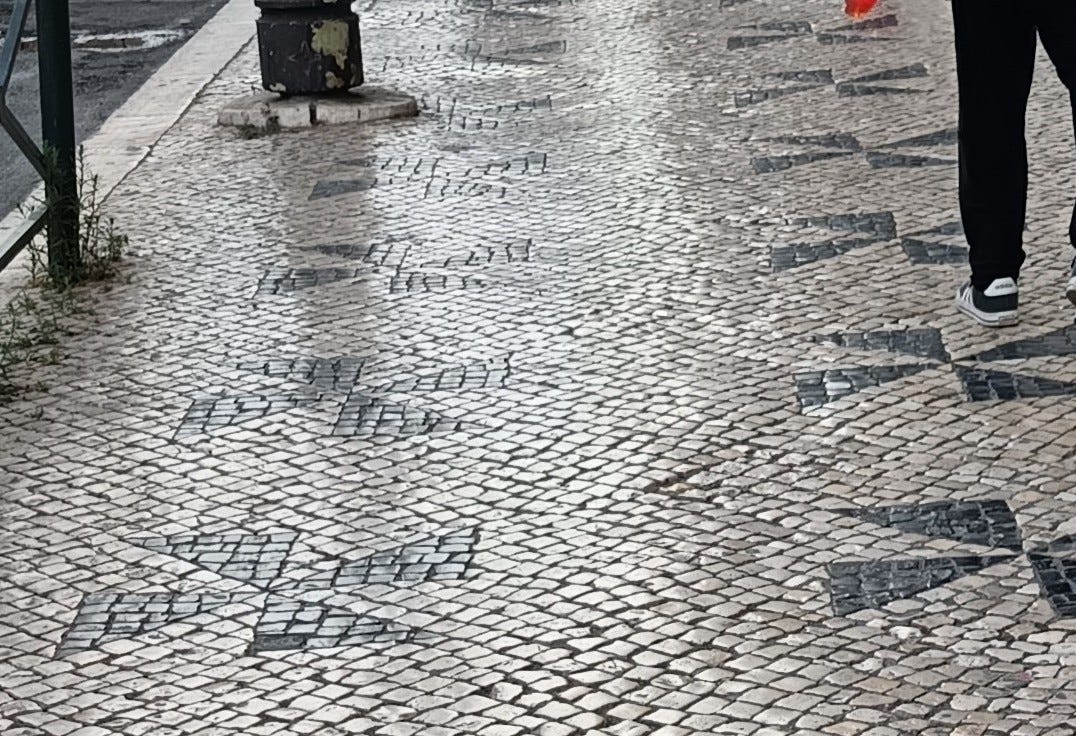
And conditions are rarely optimal.
While sunny days are the norm here most of the year, even something as simple as the steady drip of an air conditioning unit on the calçadas means you might need skates.
And then there’s the tree detritus.
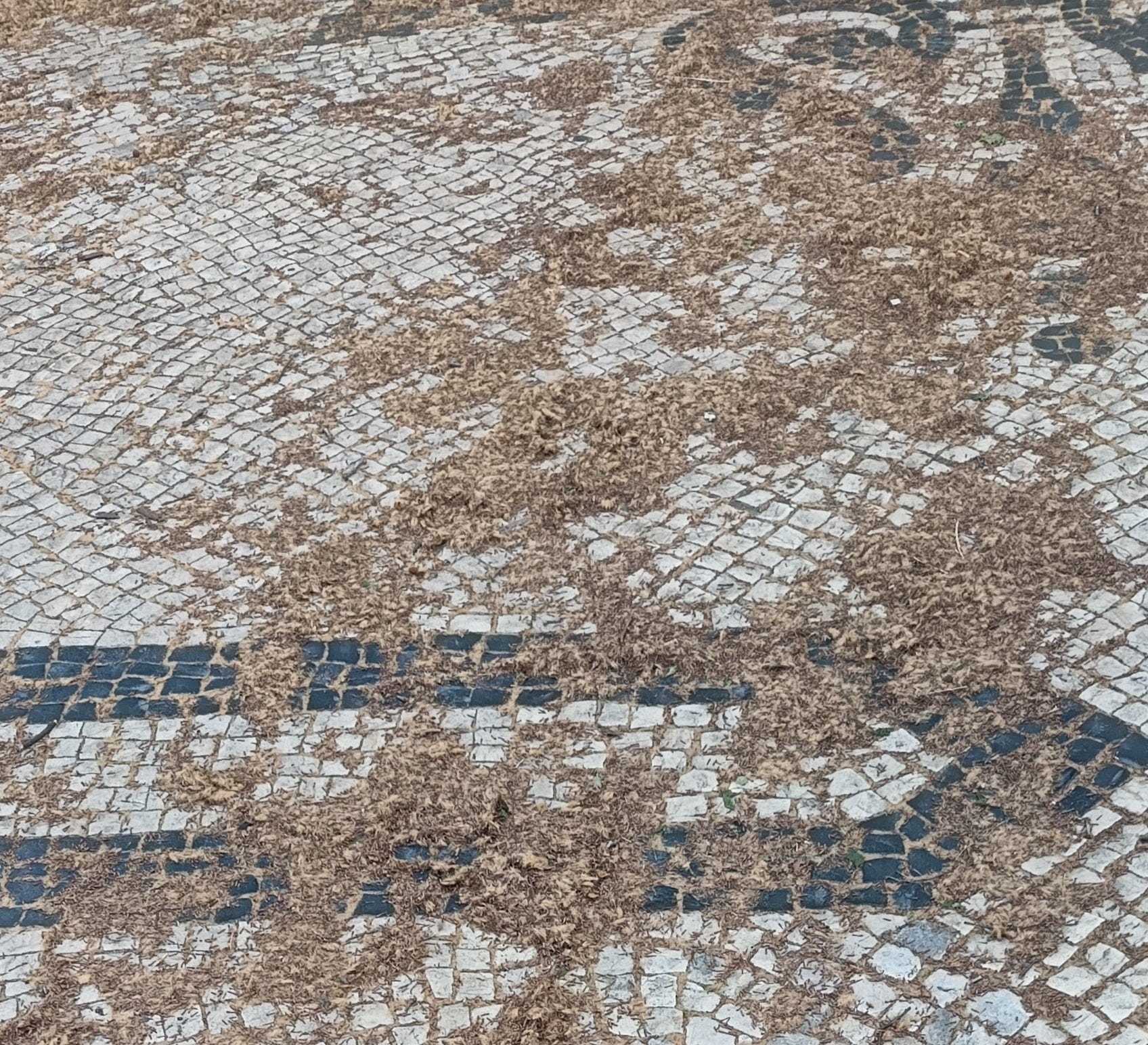
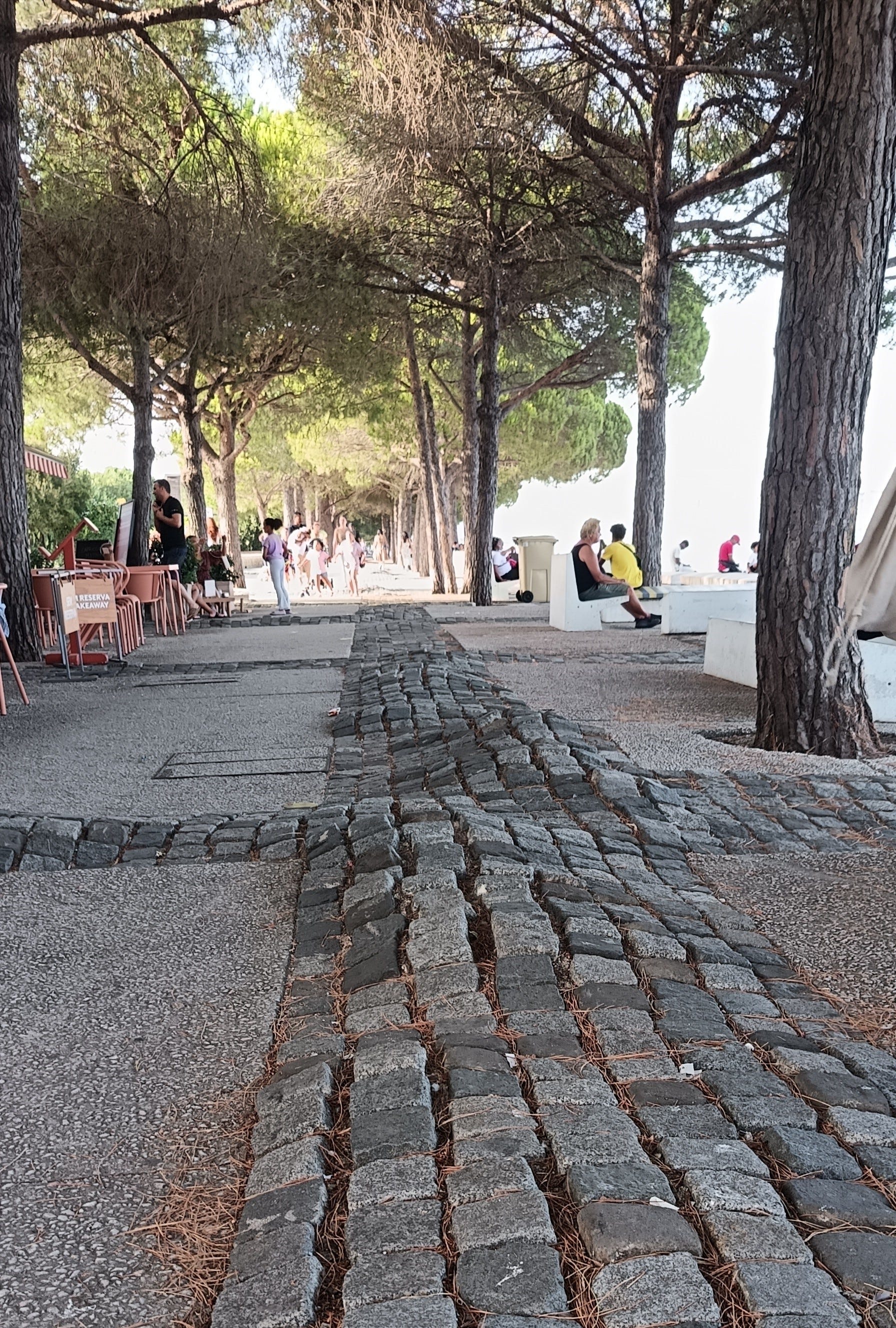
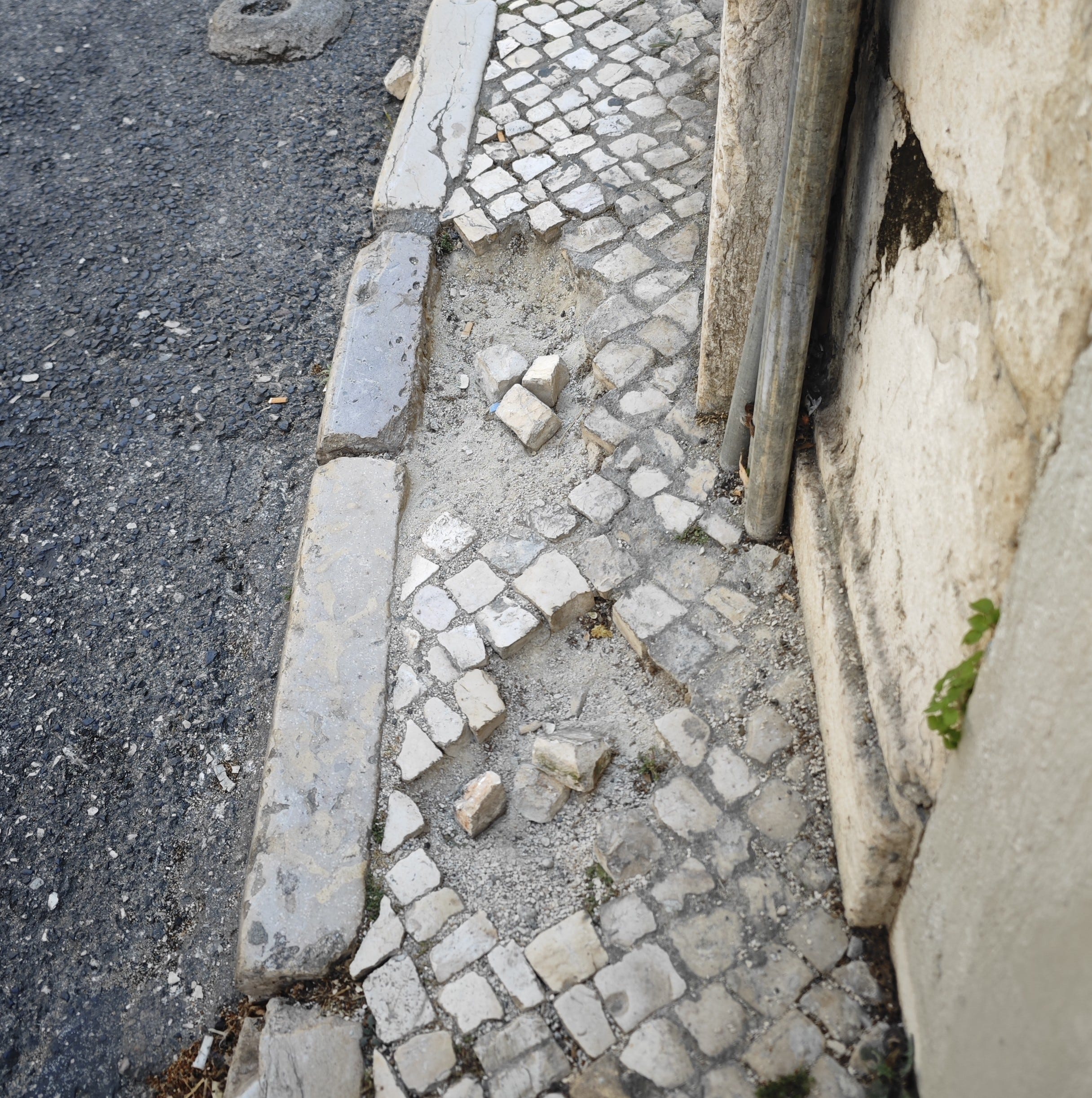
Second, because they’re cobblestones as opposed to large blocks of concrete, they’re rarely flat and even.
The stones are draped over tree roots.
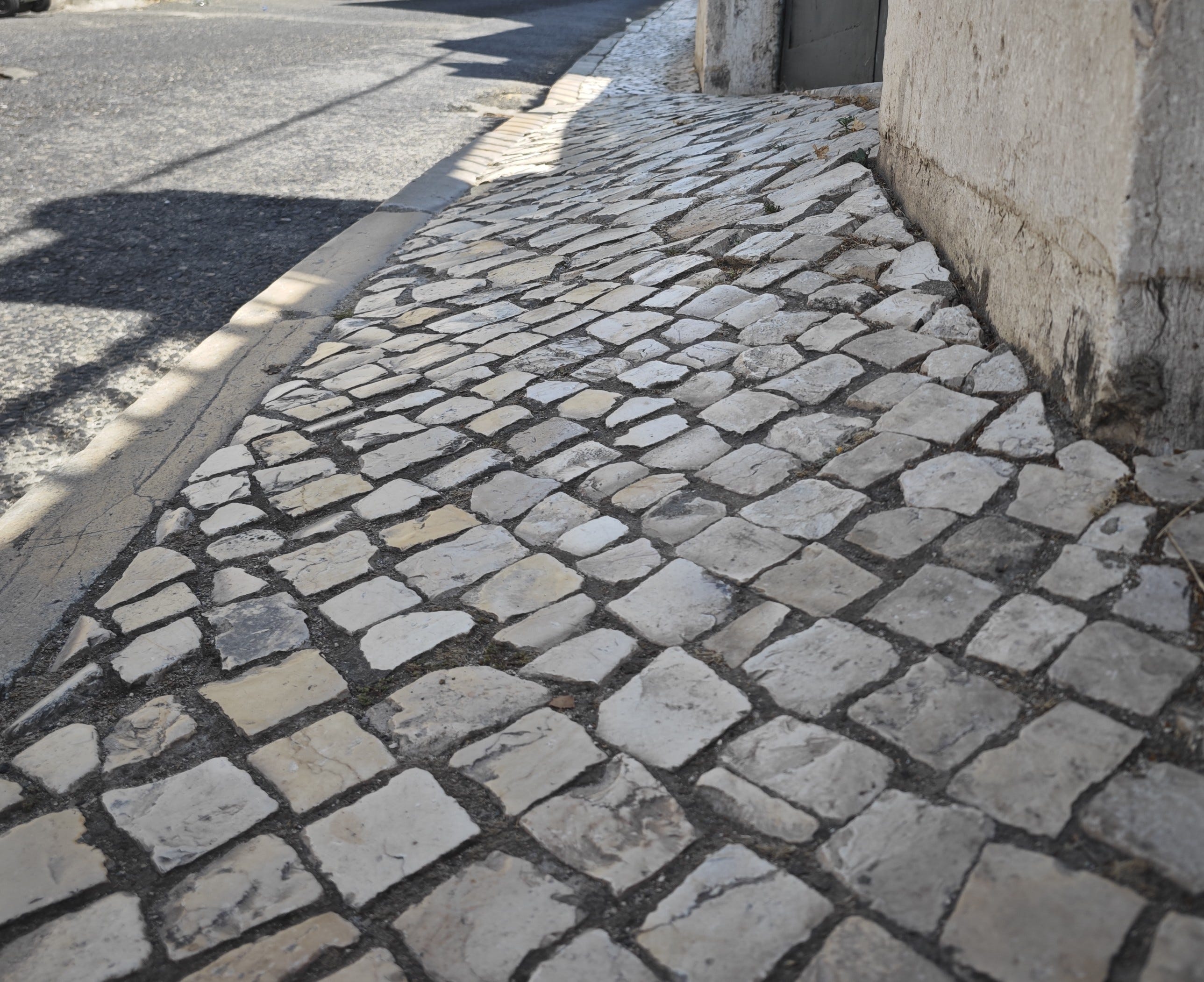
Or they’re on a slant.
Or, they can sometimes be missing altogether.
Third, the sidewalks here can get pretty narrow.
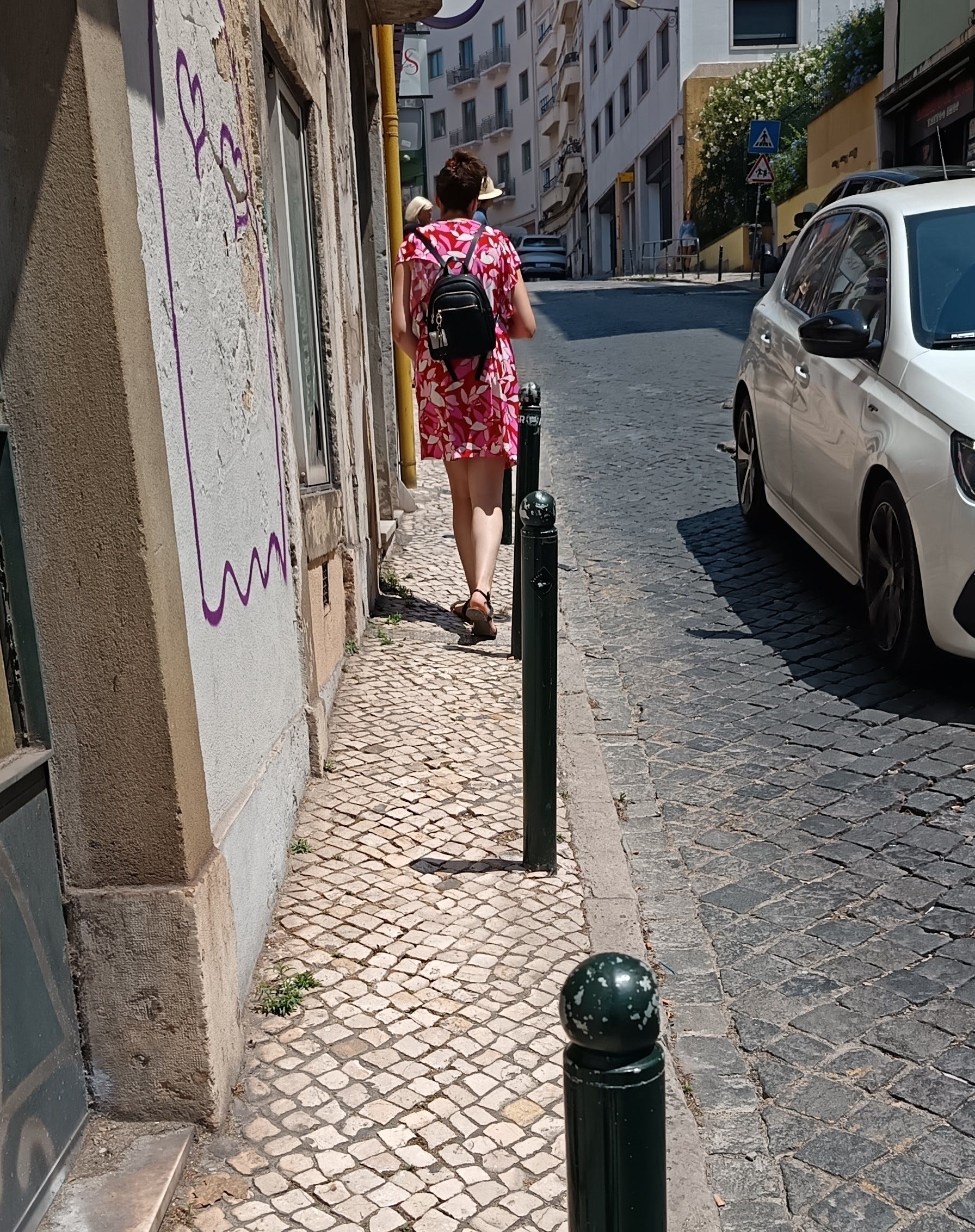
Like really narrow.
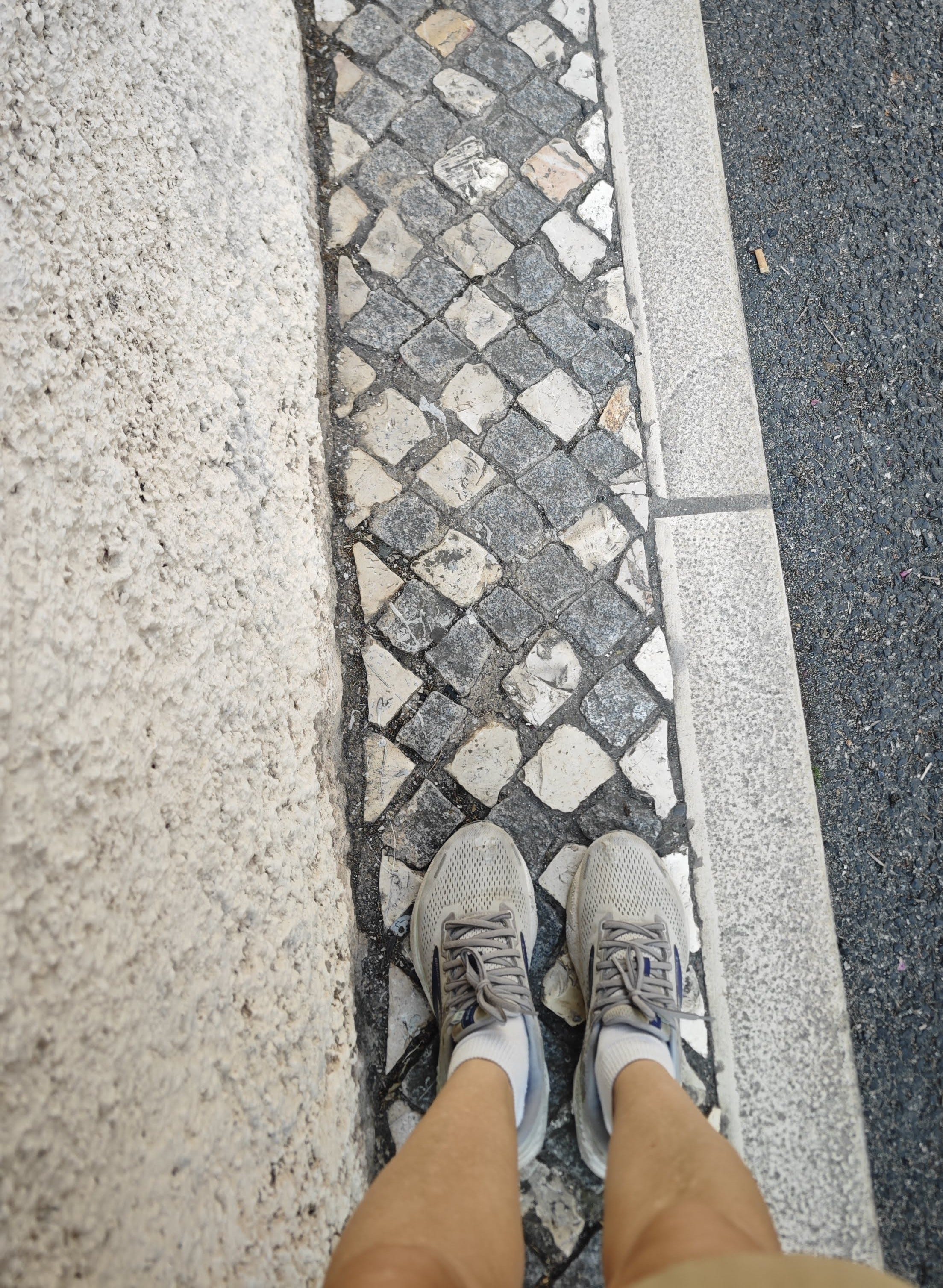
And sometimes, the already narrow sidewalks are narrowed even further.
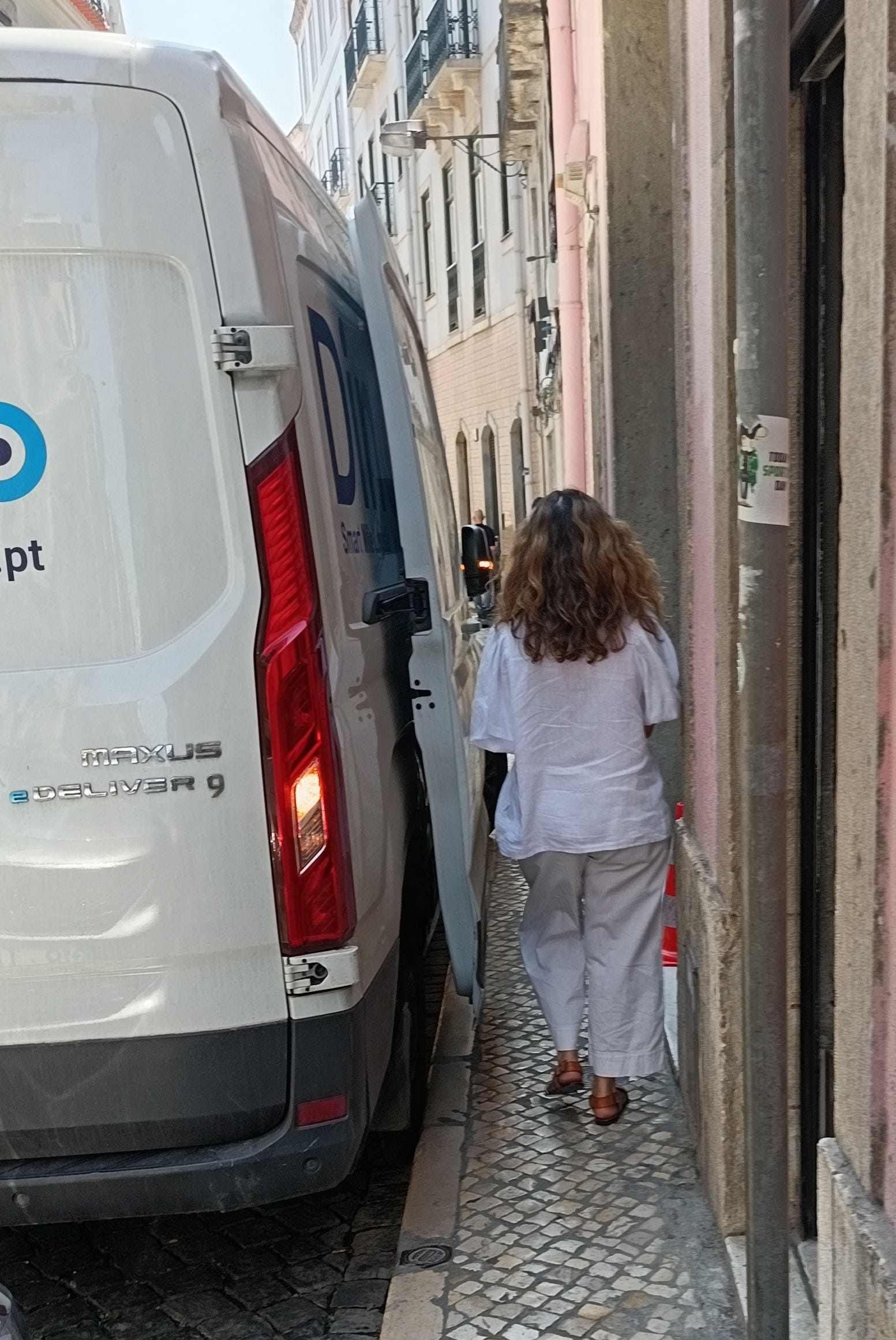
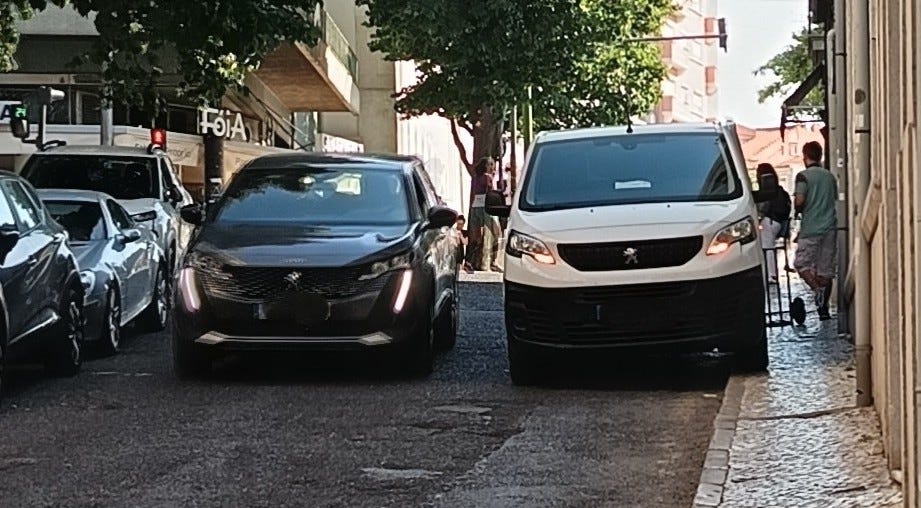
Or are just inaccessible.
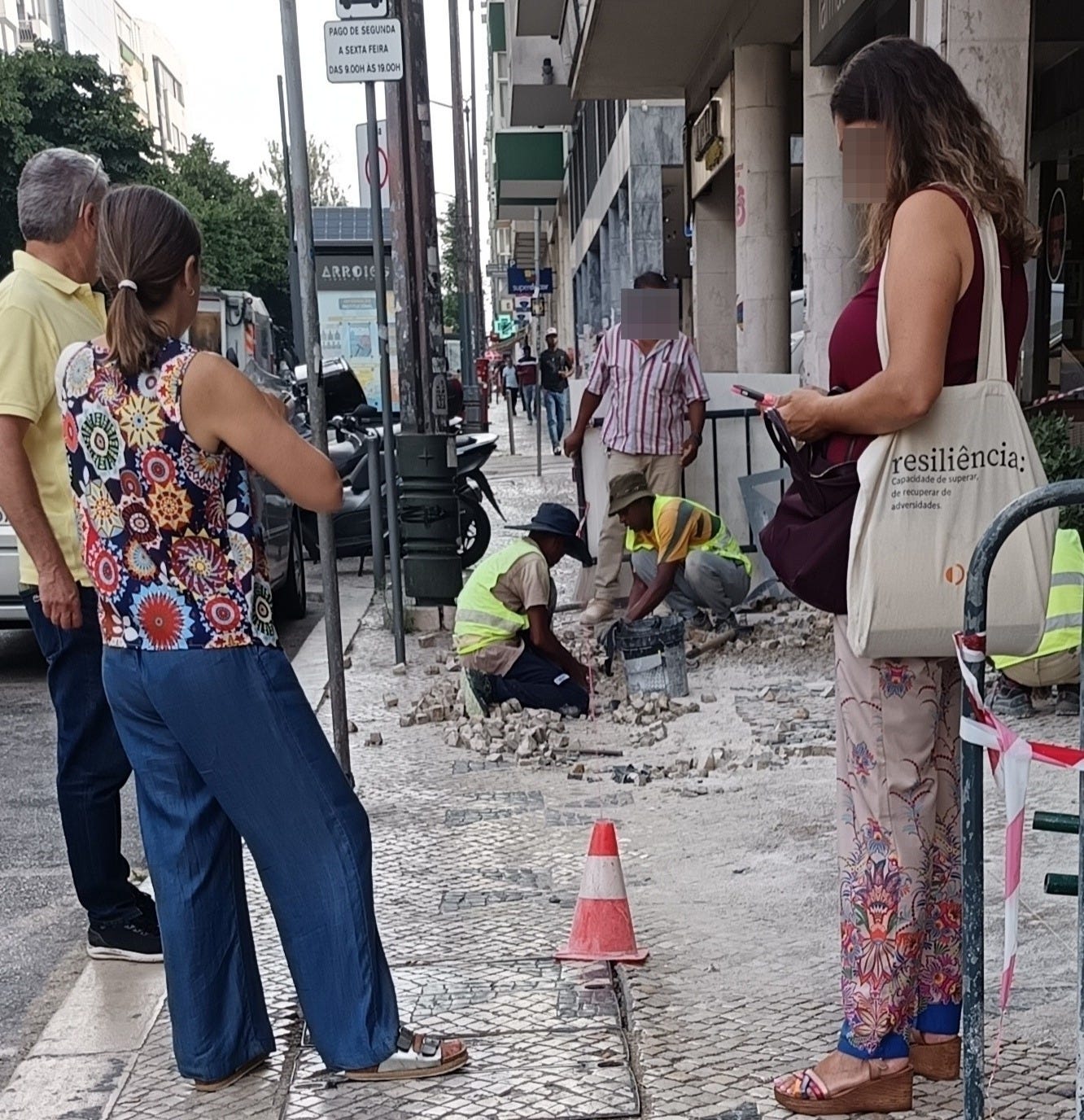
Regardless of the reason, there are plenty of places where it’s simply impossible for two people to pass each other without using the street.
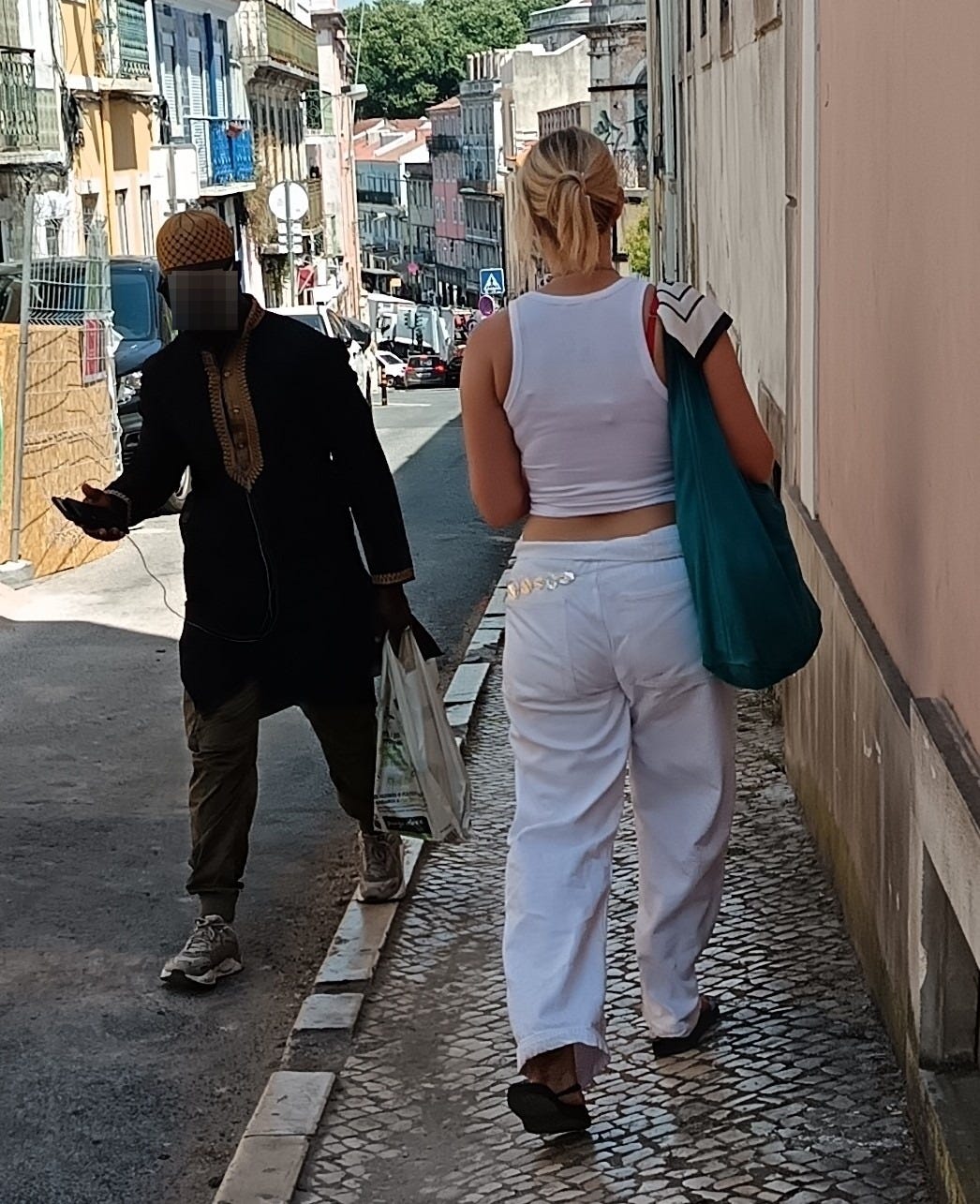
And that’s when we play a game I’ve come to call …
The Sidewalk Shuffle
We all play it almost every time we go somewhere. The rules are unwritten (and unspoken) but after nearly four years of careful study and keen observation, I think I’ve got ’em figured out:
Do not make eye contact with anyone involved.
Do not vocalize.
Look only at the cars moving on the street.
Continue to walk forward even if the cars you’re looking at are behind you.
Never, ever stop walking.
Step into the street at the same time everyone else does.
Try not to get hit by the cars.
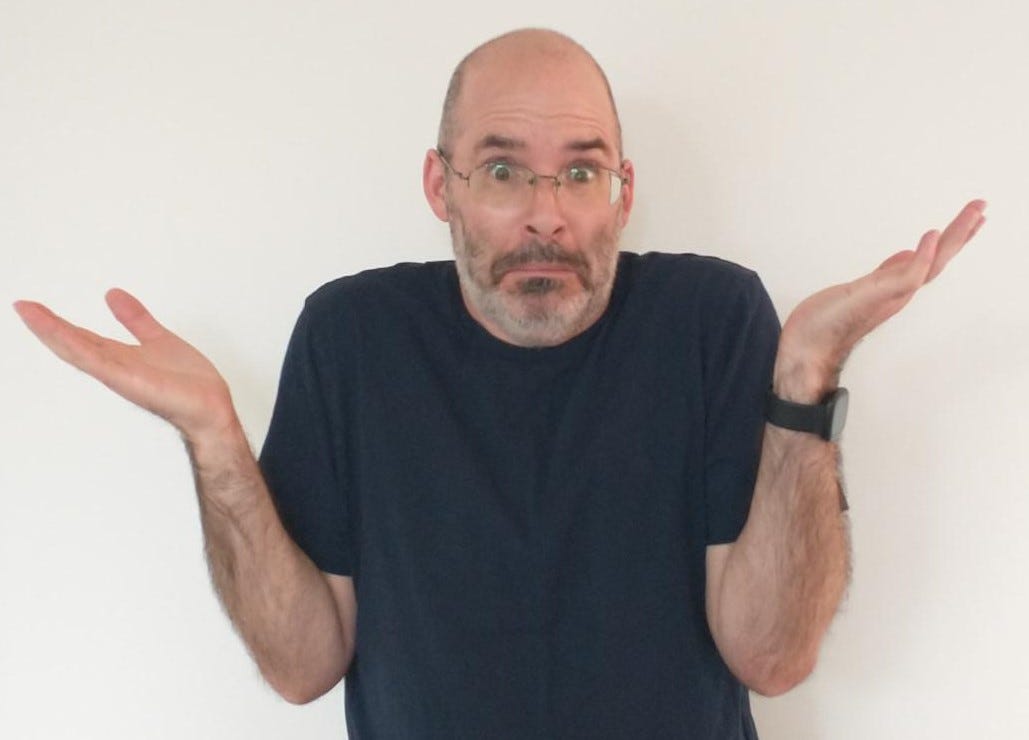
They’re as simple as they are senseless.
So I’ve been thinking about a new way to play.
Because I like games and also over-complicating things, my rules involve quickly assessing the situation with regard to the terrain and the players and then determining who should give way to whom by answering questions like Who’s working harder? Which person is more in danger due to factors like traffic and the sidewalks?
Example: I’m striding downhill empty-handed and there’s an elderly person slowly struggling their way up towards me. The one-way traffic is coming in my direction so I can see the cars.
Who steps into the street?
I do, of course.
Naturally, it’s not always this easy.
What if I’m carrying a full backpack and two bags of groceries and the person coming up the hill appears young and fit?
Or there’s a line of four people working their way up and they can see the oncoming traffic but I can’t?
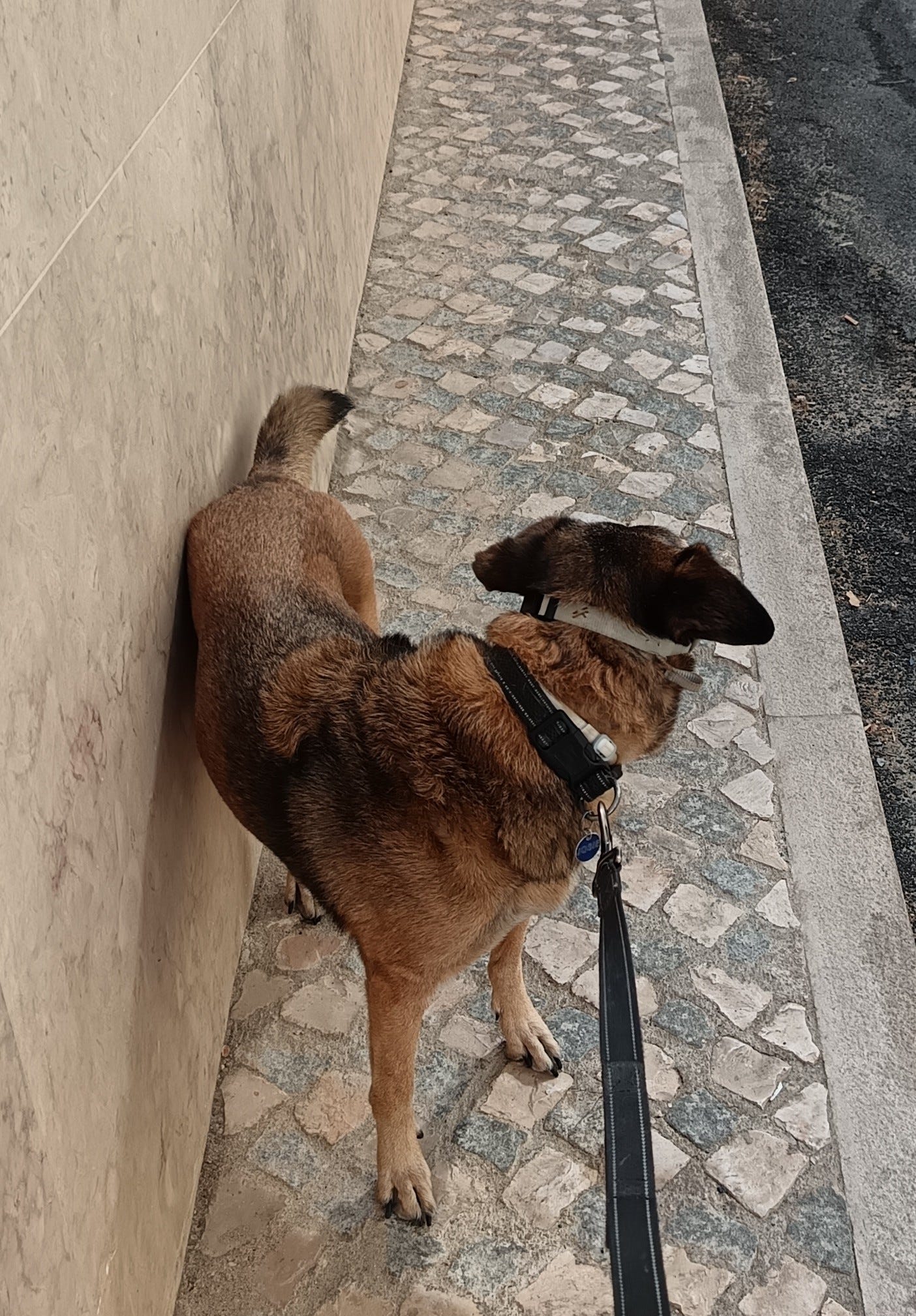
Or Josie is really intent on sniffing the wall?
The fact that nobody else is playing by my rules adds a layer of challenge as well. Which just make it more fun.
One rule I do think we could all benefit from implementing though is this:
Stop walking.
Just that change alone would give everyone a few more seconds to assess the situation and make way for each other in a safer, more sane way.
Where have you walked that’s been dangerous? And why was it so?
That’s all for now.
Love from Lisbon,
Scott
What really gets me are the groups of people who apparently are unfamiliar with the terms “single file” and “walk in pairs” and so take up the entire width of the sidewalk regardless of foot traffic going the opposite direction.
Ah this reminds me of our time in Denmark. Except it’s “Sidewalk Chicken”. And no one shares. It’s enough of a phenomenon that it regularly gets commentary on Reddit.
While I appreciate the flexibility of reusing the cobbles, they are miserable to walk on. As you highlighted, slippery—but also so unfriendly to people in wheelchairs, pushing strollers, or with other mobility issues.