
Jacaranda Time
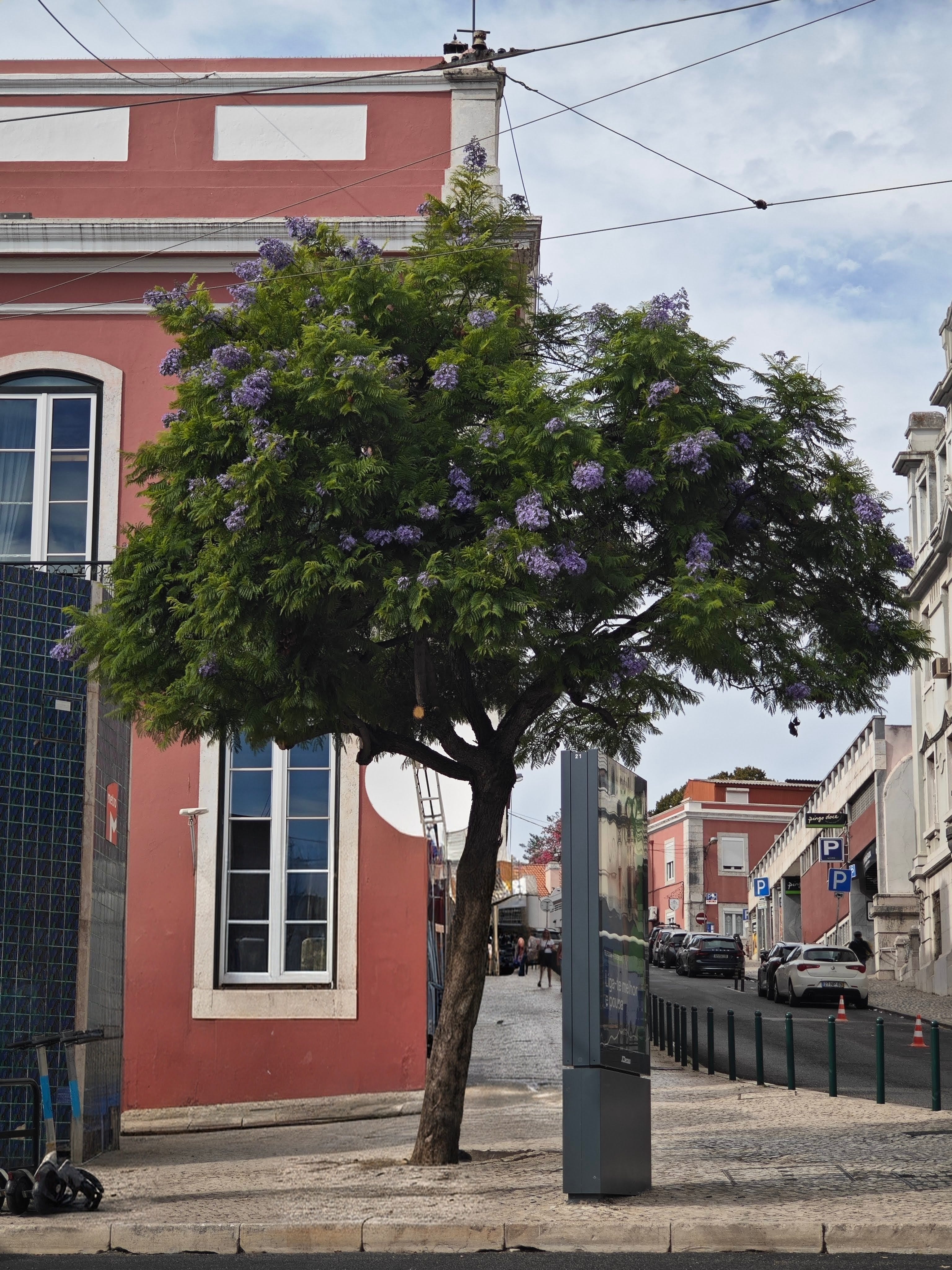
Purple is busting out all over Lisbon. Plus! Footnotes galore!

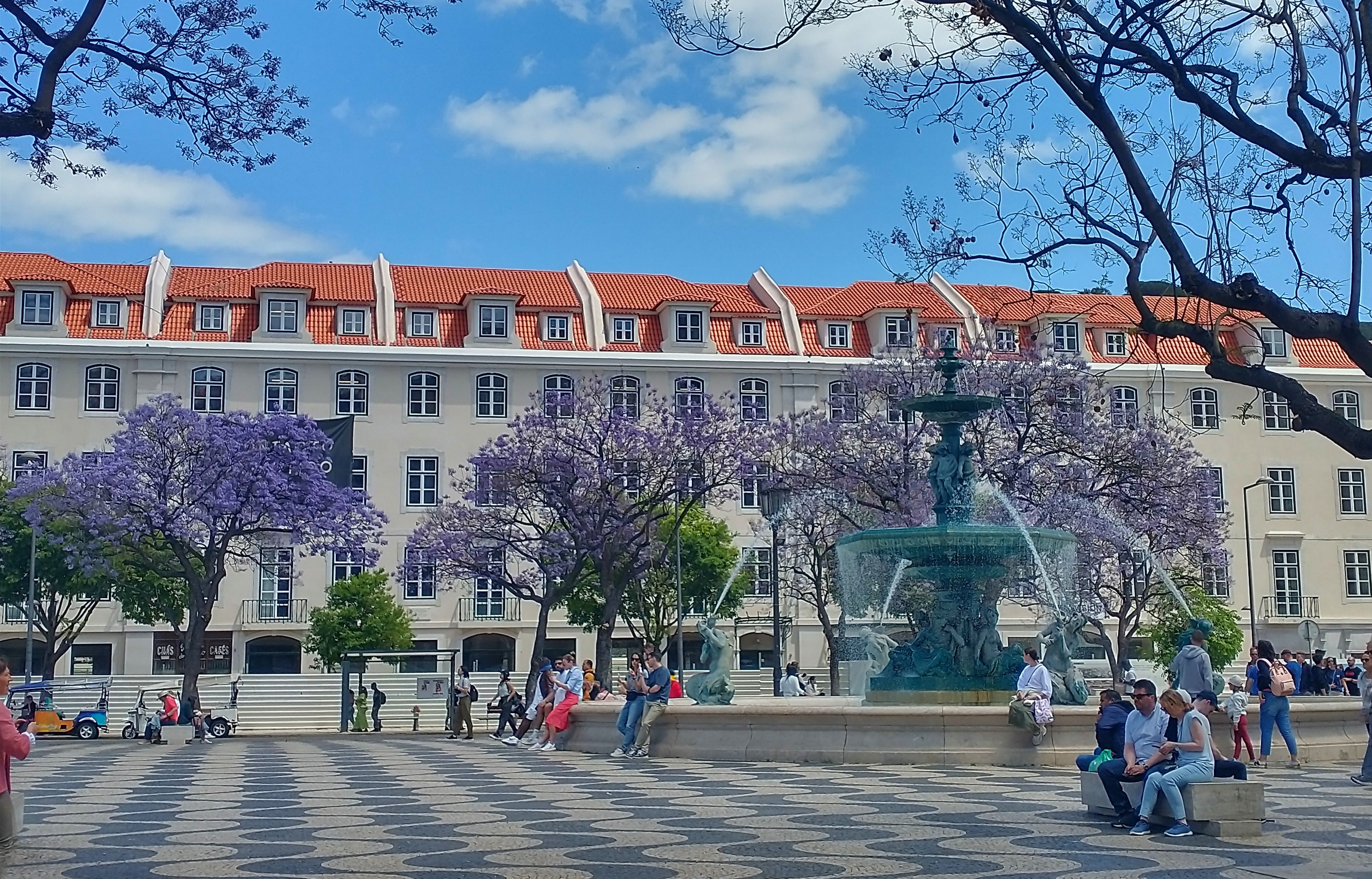
Nine years ago we took a magical trip to Mexico where we toured the lovely colonial cities that ring Mexico City. One of those cities took our hearts - Guanajato. We started the visit in that city with an amazing food tour.1 At one memorable point, we were perched on a retaining wall to eat our latest temptation. Towering above us was the most beautiful purple flowering tree. We asked: a jacaranda, we were told.
Imagine, then, our delight at finding ourselves in our new home, and that these same jacarandas grace the city, and make it come alive when they bloom in May and June.
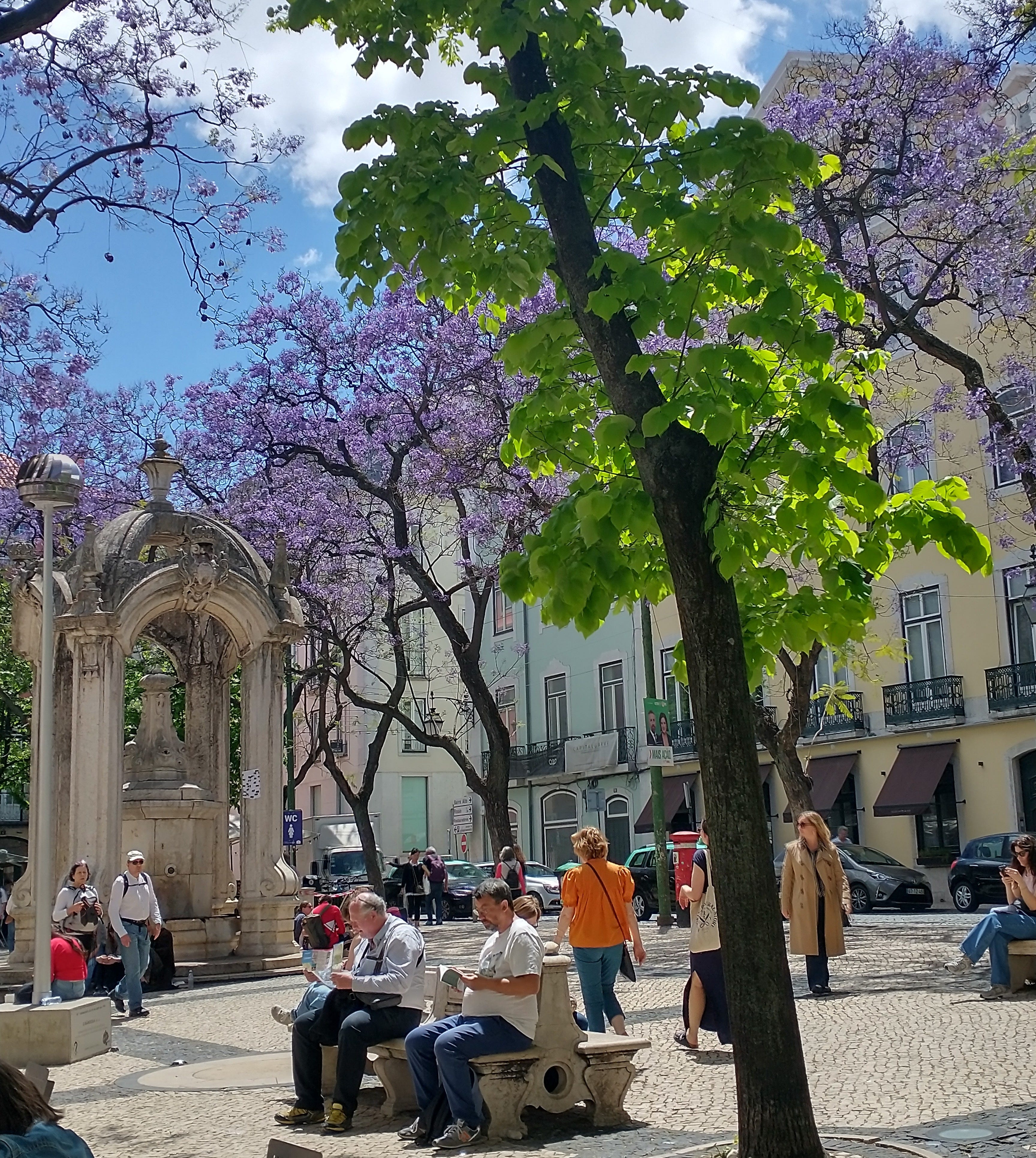
How did this magical spreading of purple joy come to be? After all, jacarandas are native to central South America. The Age of Exploration led Portugal to become the first global inter-continental empire, including Brazil. There followed in the 1700s and 1800s a time of massive botanical discovery. Many of these species made their way back to Portugal during what is called the Colombian Exchange. In Lisbon, the jacaranda bonanza was due to one guy, Felix of Avelar Brotero,2 popularly called the Father of Botany in Portugal. He was in charge of the Ajuda Botanical Garden at the beginning of the 1800s and managed to obtain seeds from Brazil for his Botanical Garden and soon began handing them out to anyone interested.
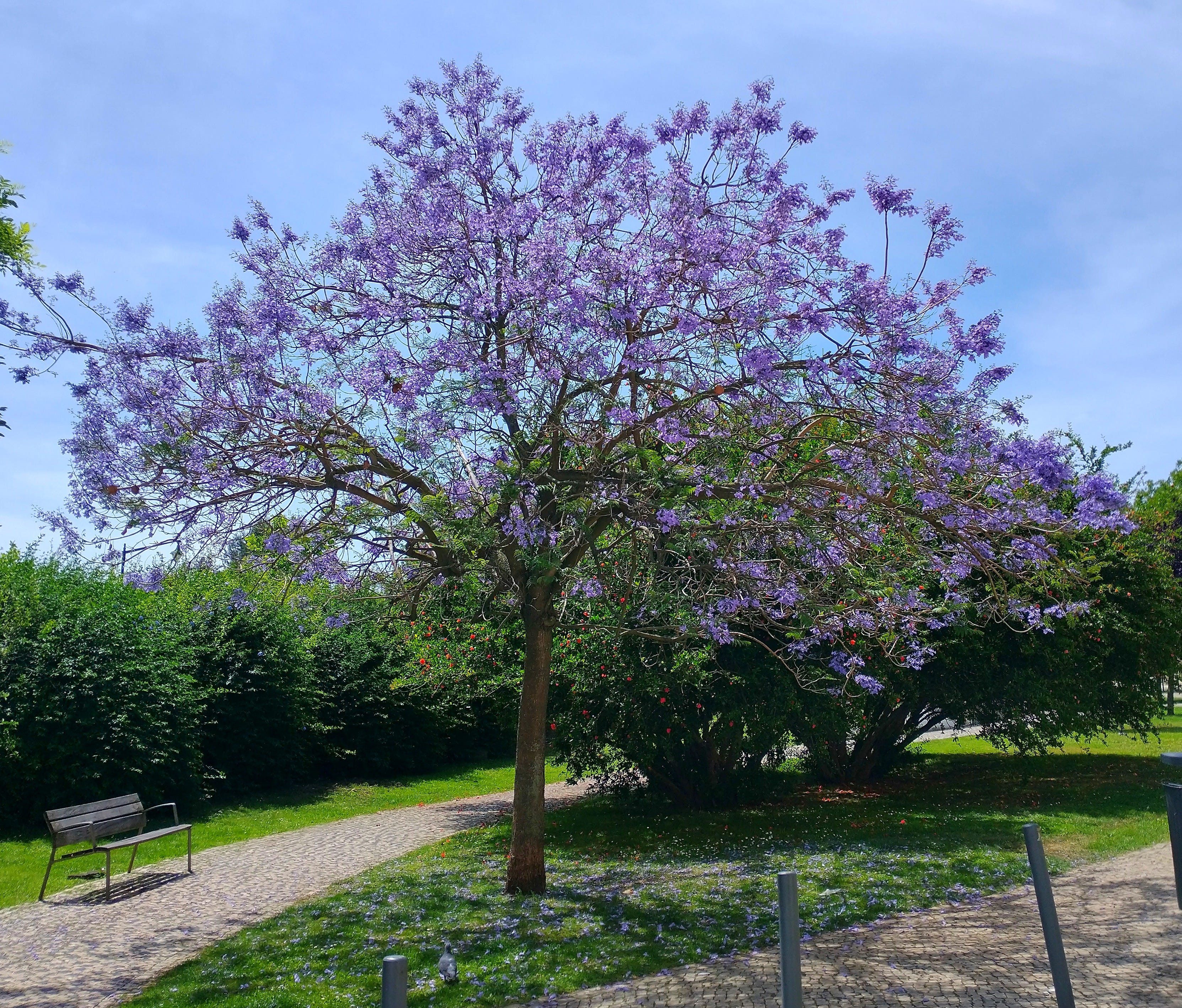
Shortly afterwards, the royal court returned from Brazil and…. What? Oh, you want to know why the Portuguese Royal Court was not in Portugal?3 Anywho, with their return, naturally the color purple was prize, and the jacarandas became a type of symbol for the returning monarchy. They encouraged new plantings throughout the city.
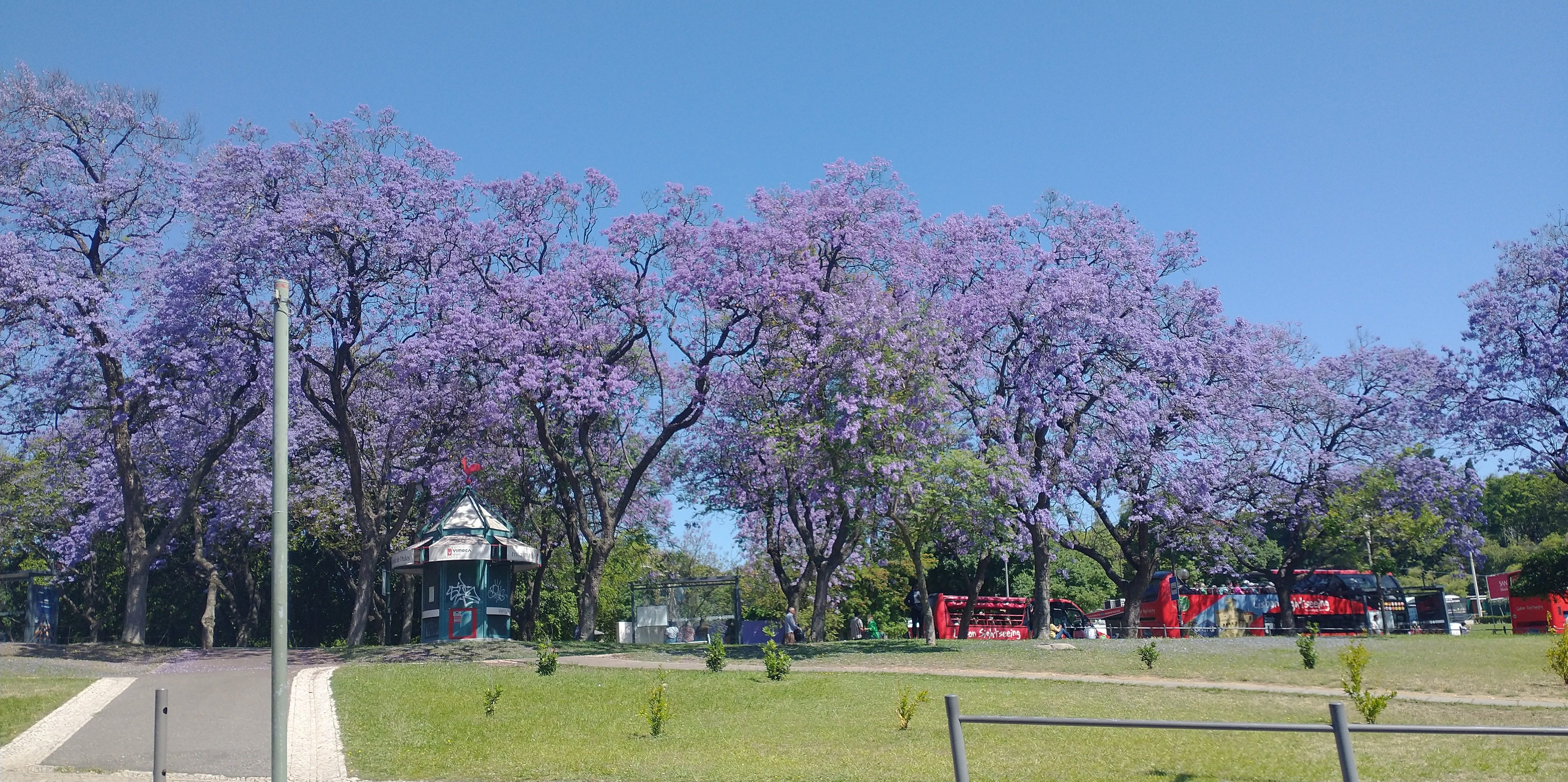
Lisbonites are mixed in their feelings about the jacaranda. Those who live near or park under a jacaranda do not like the fragrance. (I’ve not noticed it, but some like it and some don’t. Like life.) Then there’s the fact that the blossoms drop sticky stuff on your veranda or car. The vast majority, though, love them. In fact, last Spring when the Lisbon City Council and a telecom company decided to remove 47 trees to make way for a parking lot for 200 cars. Uproar ensued. Petitions were filed. The City promised to plant more trees than they were removing.4


That’s all for now.
Love from Lisbon,
Amy
Weather Report
High of 90f/32c; Low of 62f/16c. Sky is clear, but milky with Sarahan dust.
Our number one travel tip: When arriving at any new city, take a food tour when arriving. You’ll get oriented in the new city and you’ll know where - and where not to - eat while you're there.
An easy life he did not have. Named Félix da Silva Avelar, his mother went mad when he was 2 and he was orphaned. He sang for his supper, and eventually ended up as a singing chaplain. However, he had a bit too much time on his hands, and eventually the views he expressed in the numerous articles he wrote for a local gazette got him in trouble with the Holy See, and he fled to Paris. He studied natural history, and ended up becoming a medical doctor. The pesky revolution happened and he sped back home. Due to the reknown his work in the field of botany, he was appointed a professor Botany and Agriculture at the ancient University of Coimbra, spending his time researching botany and authoring numerous foundational texts. As happens to any good botanist, he was held up, survived attempted assasination by sheep herders, and suffered multiple serious falls in the mountains. The King then appointed him to direct Ajuda Botanical Garden.
So there was this queen regnant (I need footnotes for the footnote!) (that means she ruled and was not just queen consort), Dona Maria I. As one does, she married her cousin, but other than producing inbred children, he wasn’t very involved. Ok, ok, he named Félix to the Ajuda Botanical Garde. All was going swimmingly until Napoleon decided to come marching in. The Pious Queen gathered up all of her royal court - a mere 10,000 people - and sailed out of dodge to land in Portugal, where she promptly became known as Maria the Mad. And with good reason - she suffered from depression following the deaths of her husband, advisor, and confessor within two years.
For thirteen years they ruled from Brazil (imagine - the capital of a colony becoming capital of the Portuguese Empire. During the majority of these years, the Prince Regent ruled. Meanwhile Napoleon gave it up, and unrest by some of Portugal’s citizens - hoping for self-rule. Agitation increased and eventually the (by now) King needed to come home, ending a fascinating political chapter in both Portugal and Brazil.
This spurred the formation of Plataforma Em Defesa das Árvores (Platform in Defense of Trees), a citizen’s group that has had wonderful success in fighting other tree removals in different freguesias throughout the city.
There is this great book that talks about those turbulent years after the Portuguese royals fled to Brazil, and which of course is linked to Brazil's independence. If you're into historical fiction, check The Empire is You (El imperio eres tú) by Javier Moro :)
I am one who loves them. I love purple. But, I do not have any allergies.